November 14, 2013

A Remarkable 72% Energy Savings for Los Angeles Family Home

[Taken from "Go Green Provides Remarkable 72% Energy Savings for Los Angeles Family Home", written by Go Green Construction's Fernando Feldman and Stephen Li as seen in 'Qualified Remodeler']


With its mission to “minimize the impact on the environment using energy-conscious building practices”, Go Green Construction (Go Green or GGC) has strongly committed itself to sustainability. To remain up-to-date with economic demands and current technology, owner Fernando Feldman has followed up on Go Green’s Build-it-Green certification by pursuing a Building Performance Institute (BPI) certificate. BPI sets the “standards for energy efficiency retrofit work using an open, transparent, consensus-based process built on sound building science.”

The BPI certification in hand, Fernando and his team have joined utility companies like So Cal Gas Co. and So Cal Edison in bringing sustainable homes to residents in the LA region. This program, Energy Upgrade California, has led many area homeowners to reconsider their home remodeling projects.
One GGC client’s home in particular has achieved a remarkable, even extraordinary, improvement in energy savings.

Meadowcrest is located in the hills of Sherman Oaks, shaded by several trees and well-positioned to receive natural lighting. The home was originally built in 1963, and has been subjected to several interior remodels over the years, which have resulted in instances of water damage and mold growth, as well as poor insulation and considerable air leakage. Indeed, GGC’s first task was to test the kitchen for mold as the clients had noticed a black stain growing around the kitchen cabinets. Mold from a refrigerator water leak had spread and contaminated a large portion of the drywall and cabinets. GGC removed any and all mold spores, removed the damaged cabinets, and replaced the drywall.

GGC’s contract called for remodeling a large portion of the Meadowcrest home: floors to be changed, a part of the roof repaired, walls moved, the unused fireplace removed, and the kitchen redone. GGC also suggested the client employ the Energy Upgrade California program, which enables savings of up to 40% (as advertised) on the home’s utility bills and, in addition, provides for rebates of as much as $8,000.

Initially, GGC knew it could go above and beyond the advertised energy savings, but even it was surprised its methods of sustainable building would have the dramatic result of 72% in savings.

During pre-construction, GGC performed an energy test to determine existing conditions. The tests included a blower door test for air leakage in the walls, doors, windows and ceiling as well as a duct blaster test of the efficiency of the HVAC ducts. GGC also performed a combustion safety test on all the combustion appliances, for example, the gas oven, dryer, etc. Employing a model derived from the Energy Pro program, GGC was able to compare the home’s existing conditions and a proposed condition model. The proposed energy savings came out to 45%.

During construction, Go Green used smart building techniques to maximize the home’s energy efficiency: meticulous air sealing of the building envelope; duct mastic used at all electrical boxes; fire proof caulking on all seams of recessed light housing; calculation of the specifics of the wall system to address any dew points that could cause problems with moisture in the wall; assuring the quality of the installation of ceiling and wall insulation; replacing the HVAC system using a Manual J,D, & S, which guarantees its proper fit and function; adding insulation in the HVAC ducts to prevent leakage and temperature change, and promoting efficient air flow to the rooms.

Test-out procedures repeated the initial tests. Go Green was able to compare the real post-construction results to the proposed results. Because of Go Green’s excellent job the home achieved 72% energy savings. Factors contributing to this number included the outstanding job Go Green did with air sealing the ceiling and walls, and its replacing the original 10 SEER 5 ton HVAC unit with a 1.5 ton 13 SEER unit. Adding R-38 insulation to the ceiling and R30 insulation to the walls created a comfortable and balanced air temperature from room to room.
In a nutshell: Go Green’s long experience in sustainable construction, its application of the latest technical advances in rational construction and its dedicated and well-conceived craftsmanship while employing only standard construction materials have enabled Meadowcrest’s current HVAC system to consume less energy than a typical hair dryer.

November 5, 2013

Through the Eyes of an Intern - Go Green's Office Space

On my first day at Go Green Construction, I had no idea that the office was sustainable. It was typical of other offices I’ve seen – with working desks, computers, a well-lit environment, a conference room, and a clean bathroom. I did notice however, it was unusually cool in temperature.
As I worked longer here, I began to notice the perks of working in a “green office”. Our lighting sources include not just florescent lights, but natural sunlight to a major degree. Our large windows and our large-windowed doors not only admit light, but also deflect excessive outdoor heat.
Our bathroom is also green. Its dual flush toilet consumes less water than the typical standard toilet. In addition, our sink is controlled by a simple water accelerator, which controls water output.
What surprised me the most about this office is its phenomenal temperature balance. The temperature in the office is always cool during a hot summer day, and it stays warm during the winter. I thought that someone must always be blasting the A/C or the heating unit, but I noticed that there is no air conditioning or heating system to be found.  It turns out that the office maintains its temperature due to a special foam (a 2-lb closed cell roofing foam with an elastomeric coating) our company installs. This foam performs as a superior insulation.
My overall impression of the green design of this office has been positive and inspiring.  It is great to know it consumes a minimal amount of energy while retaining maximal functionality. I am proud I work in a green, eco-friendly office.

October 28, 2013

Energy Efficiency and Comfort Levels

Several factors can affect the comfort level and energy efficiency of a home. In reality all existing homes have a significant opportunity for improvement, especially those that were built 20 years ago when no or minimal research was being conducted on energy efficiency of buildings. Today energy conservation is an important issue due to rising energy prices and the possible effects it may have on our environment. In today’s world, home builders have a better understanding of what affects the energy efficiency and comfort of your home. We at Go Green California are making an effort to keep up with the latest technologies, construction methods, and scientific findings that can potentially have negative effects on energy consumption. Our goal is to understand our customer’s goals and concerns, educate them on how we can help them achieve a more energy efficient and comfortable home, and work together to find solutions .Not only does improvement increase comfort but it can also increase the resale value of your home.
           
            Good recommendations cannot be given without a proper inspection of the property. Inspection should start before visiting the property and identifying the climate zone in which it is located, important if it’s your first time visiting the area. The person who is conducting the inspection should also familiarize himself with local markets such as energy prices, construction methods, wages, etc. He should also attempt to get in touch with the local building department to see if he may acquire information regarding the drainage, age, additions, and type of construction of the property.  Inspections in home should be carried on by a well trained individual who has knowledge of construction practices and who understand what can affect the energy efficiency and comfort of a home.

Impacts on energy efficiency, health, safety, durability and comfort may result from duct leakages, air infiltration, insulation, moisture management, and building envelope air tightness. A building envelope is the insulation and building materials that surround the conditioned areas of a building and which help maintain the temperature of the conditioned area. An important action when trying to create an air tight building envelope is to identify potential sources of air leakage and take the appropriate means to seal them. Air ducts and pipes are sources where air leakage may occur and depending on what they carry they could have negative effects on comfort and health. Several homes suffer from seasonal issues such flooding, mold, and odor which could result from improper pipe drainage and duct leakage. Proper ventilation is also required in order to maintain good air quality. A tight building envelope helps keep the proper temperature inside a home but it does not help maintain proper air quality, in fact it may create problems such as high CO levels, moisture, and particulate dust. Therefore it is important to provide good ventilation where the amount of air entering and exiting a house is controlled, derived from clean, dry sources, and which helps maintain good air quality and healthy living.

January 22, 2013

Tired of Conventional Roofing? Try Green Roofs for a Change!


Roof gardens are more popular in urban environments especially in the last ten years. They are frequently used as, social, symbolic, and contemporary space. Roof planting provides food, temperature control, hydrological benefits, architectural enhancement, a habitat for wildlife, and recreational opportunities. 

Studies have shown in the past that plants have the ability to reduce the overall heat absorption of the building which then reduces energy consumption. Another great benefit is to reduce the overall heat buildup in cities like Los Angeles, the absorption of solar radiation by roads and by buildings. Plants however do not raise more than 5 F degrees above the ambient and are sometimes cooler. This in fact cools the environment up to 20 F degrees less. Roof garden cooling abilities become more necessary in warmer areas. 

Other benefits are reduction of carbon dioxide impact, reduction summer air conditioning cost, and reduction winter heat demand lengthen, and remove nitrogen pollution in rain fall naturalizing acid rain and finally provides songbird habitat. This is according to the study in the University of Cardiff. 

May 1, 2012

We will be at AltBuild Santa Monica again this year, come see us and other great companies that support sustainable building and healthy living!

April 20, 2012

Green Gardens for Earth Day!


A green sustainable garden can be achieved by incorporating several ideas into your design or simply becoming more aware of what can negatively affect our environment. When we talk about a sustainable garden we are referring to a garden that is able to maintain long-term well being, for both humans and the environment, and at the same time its resources are well managed to minimize consumption and obtaining the most out of them.  As we all know, we need to eat, including wildlife. By hanging feeders or introducing native shrubs or fruit/nut trees, your garden will become a five star restaurant for wildlife, that’s if you enjoy the presence of wildlife. One of the best ways, probably the least expensive yet most ignored way to make your garden more sustainable, is by conserving water. Other ways your garden can become more sustainable is by reducing resources and or using renewable ones, taking responsibility of your gardening practices, reducing the amount of chemicals used in a garden especially when nature can solve the problem, and by growing your own organic foods.
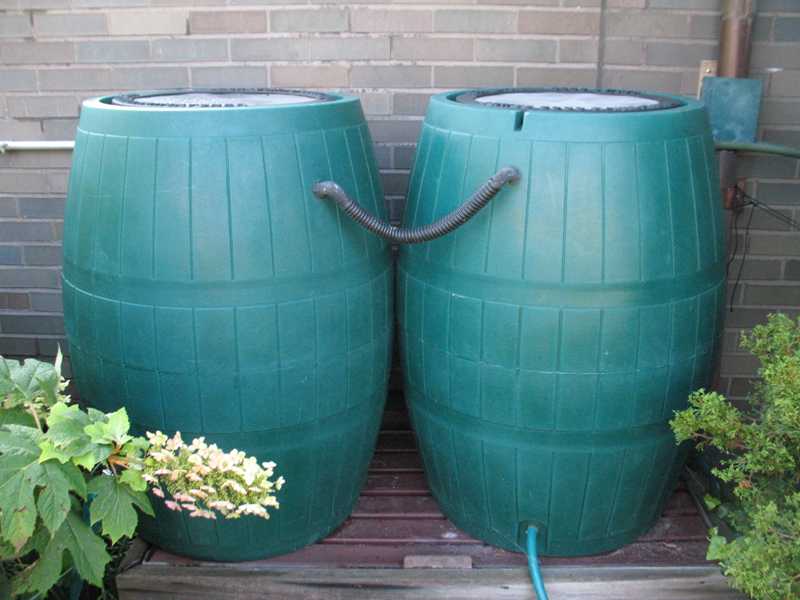
                Water can be conserved in many ways. Having clean access to water is a privilege and not many people in the world enjoy such privilege. Although some ways of conserving water may require more effort than others, the intention to conserve it is worth it because water is not an infinite resource and it may not last forever like many of us think. For example, instead of using a hoe to clear out your driveway use a broom to conserve water. Reducing resources and using renewable resources also helps reduce the impact in our environment and makes our gardens greener. Not all plants are created equal and not all plants are able to survive in the same medium, since soil composition tends to vary. By informing yourself on plants needs and requirements, you can pick plants that prefer the type of soil that’s already available in your garden, at the same time you are reducing resources. When using plastic in a garden, try and use high recyclable plastics with low VOC. Some plastics leech chemicals into the environment and using plastics with little or no VOC’s helps reduce environmental pollution.  Creating a sustainable garden may also involve responsibility. Taking responsibility of your garden practices is also important if your goal is to create a sustainable garden. Some positive gardening practices may include collecting rain water in rain barrels in order to use that water to water your garden. Rain water tends to be better for plants and you are also helping to reduce run off which tends to wash pollutants into your local water shed, not to mention you are also conserving water. As a responsible owner you can take on more responsibility by finding ways to avoid the use of harmful chemicals such as herbicides and pesticides, alternate ways such as implementing biological pest management practices. Growing your own vegetables and fruits will also make your garden more sustainable and at the same time save you money.

March 26, 2012

Energy Upgrade CA


Go Green California became a participating contractor in the State of California’s new program, Energy Upgrade. As part of the program, Go Green was required to attend and receive training in the latest home performing standards in order to be considered a qualified contractor for the basic upgrade package. The required measures for a basic upgrade include: air sealing, attic insulation, duct sealing, hot water pipe insulation, thermostatic shower control, combustion safety testing, and smoke/co detectors. As part of the training process, some of Go Green’s employees attended a two-hour orientation about the program and a three-day building science basic training about building envelope elements.  All participating contractors are trained to provide the highest level of service from nationally recognized home performance and green building organizations.
The Energy Upgrade Program is a program that provides assistance to qualified individual who are looking to upgrade their homes in order to increase their energy efficiency. As part of the program qualified individual might be able to receive up to $4000 in utility incentives, $500 in federal tax credits, eligibility for weatherproofing services, energy efficient appliances, and various local city and county rebates depending on the area in which you live. At the same time individuals will be receiving energy education which might range from how to conserve energy to reduce your utility bills, improve air quality, conserve resources, reduce green house gases, and most important how to make your home comfortable in all seasons. For more information you can visit www.energyupgradeca.com, www.cpuc.ca.gov or contact your local utility provider. For information regarding the weatherization process, qualification criteria and a list of local service providers visit www.csd.ca.gov. The price of energy has been steadily increasing and educating yourself about energy efficiency is important in order to maintain your bills low and to educated people about the importance of keeping our planet clean and conserving resources.

November 29, 2011

A Rumbling Deal

Current technology cannot help predict earthquakes they are phenomenons that occur without warning. Depending on the magnitude, an earthquake may cause significant damage as was the case in Japan which experienced a magnitude 9 earthquake. Many of us aren’t prepared and might even think a disaster of such magnitude will never happen here in the U.S. We cannot assume an earthquake will never happen, especially residents living in California where earthquakes are known to occur. One thing we can do is prepare for such an event. One smart decision home owners might consider is buying earthquake kits which vary in price and supplies.
When buying an earthquake kit take a look at the supplies it includes since some supplies tend to be more useful than others. While researching several earthquake/emergency kits, we found kits that range from $14.99 to $499.99 depending on the number of persons in a household and the supplies it includes. Keep in mind your location and the condition you might be exposed to during a disaster. For example you wouldn’t need a water proof poncho if an earthquake struck California in the middle of summer. Look for kits that supply items necessary for survival, items such as first aid kits, water, food bars, waterproof matches, candles, water purification tablets and some even offer tents to shelter 1 or 2 persons. Some of the more expensive kits also include portable fire extinguishers and a 3 way powered radio with cell phone charger. 3 way power indicates 3 different source of electricity: solar, hand crank, and direct current (battery powered) all of which can be useful depending on the environmental conditions one is exposed too during a disaster. One usually thinks Swiss army knives should be included with every earthquake/survival kits but it was surprising how many kits don’t even offer such a tool. Swiss army knives are equipped with useful tools for survival ranging from small knifes, can openers, screw drivers, to small scissors. Websites such as essentialpacks.com and quakekare.com offer some of the better supplies and their prices vary depending on your preference. Preparing for an earthquake is always important in order to help minimize casualties and disaster. We cannot take nature for granted especially after the damage experienced in Japan.

November 17, 2011

Radiant Floors

A radiant floor is a type of floor system that supplies heat directly from the floor to object in contact with it or in its line of site. They depend on radiant heat transfer, which is the delivery of heat directly from the hot surface to object in the room via the radiation of heat, also referred to as infra red radiation. Infra red radiations are energy waves which are given off by all warm objects and produce heat in all objects they strike. A good radiant floor design includes proper insulation of the space to be heated (to minimize energy loss) and an efficient heating system. The 3 most common types of radiant floors are radiant air floors, electric radiant floors, and hot water (hydronic) radiant floors.

Radiant air or forced air floors are those in which heated air is pumped through a network of pipes and then heat is transferred via infra red radiation. Two disadvantages of radiant air floors is that air cannot hold large amounts of heat compared to other sources like water and they are usually not cost-effective. As many of us have noticed, the price of energy has been slowly increasing and may continue to do so. Most radiant air floors require a system such as a heater that requires electricity or fuel in order to keep the air warm. If the price of electricity keeps increasing so will your bill.


Electric radiant floors are floors in which electric cable or mats are built into the flooring system. Energy in the form of heat is passed through conductivity to the cable and then it’s dissipated through infra red radiation to other objects. Again, one of the big disadvantages of electric radiant floors is the high cost of electricity. Such system would only be cost-effective if it were to be installed in an area with significant thermal mass. Material with significant thermal masses, such as a thick concrete slab, can store large amount of heat and stay warm for some time. The heat stored in the slab helps warm up the space.


The most cost effective, most common, and one of the more efficient systems are hot water or hydronic radiant floors. Hydronic radiant floors are floors in which a network of pipes is placed within a flooring system and hot water is pumped through the pipes to keep the space warm. They usually require little electricity and water can also be heated with a wide variety of energy sources including standard gas or oil boilers and solar water heaters, all which have high energy efficiency. The temperature in each room can be controlled by adjusting the flow of hot and cold water as you would do with your shower. Although hydronic systems cost more up front than standard forced air systems, they are usually more efficient and last up to several years longer.

September 30, 2011

Origins of Green Design


Green design or otherwise known as sustainable design originated from ancient Greek, Roman, and Chinese in 500 BCE. The evolution of sustainable design focuses on the position of the sun. Houses where designed in ways that the sunlight during summer was diffused light and during the winter direct light. This caused the practice of solar architecture to be popular among the citizens of each region. Current sustainable design is a form of building or design using your resources of the location as well as the materials to the environments advantage. The practice of solar architecture continued with the Romans, who similarly had deforested much of their native Italian Peninsula by the first century BCE. The Roman heliocaminus, literally solar furnace, functioned with the same aspects of the earlier Greek houses. The numerous public baths were oriented to the south. Roman architects added glass to windows to allow for the passage of light and to conserve interior heat as it could not escape. The Romans also used greenhouses to grow crops all year long and to cultivate the exotic plants coming from the far corners of the Empire. The green houses supplied the kitchen of the emperor and everyone in the town during the year.

The ancient architects have left more than just buildings. After the epic industrial revolution era buildings were design to ornate the streets of the world. Ever since than much of the green house affects has cause the 21th century population to rethink the idea of building and retrieve to the roots and ideology of architecture from ancient Roman, Greek, and Chinese. For example the state of California has implemented to their most current building codes to in force sustainable design. The influence that ancient architects left are use to benefit the environment and the population. Today, energy efficiency, appropriate technology, land restoration, and ecologically sustainable energy and waste systems are recognized considerations or options to construction, architecture and design. Currently in the United States the LEED building rating system rates the structures on their environmental sustainability.

A Bright Idea!

Light bulbs can come in a variety of types, shapes, and sizes depending on the usage or preference. Four of the most common types are: incandescent, fluorescent or compact fluorescent, metal halides, and light emitting diodes (LED’s). Incandescent light bulbs tend to have low initial cost, can come in small sizes and in a variety of shapes, can be connected to simple circuits, but they tend to have low service life and low energy efficiency, which results in excessive heat outputs. Fluorescent bulbs have high energy efficiency, low heat output, low operating cost, long service life, but they do require ballast in order to provide a constant current and they tend to be temperature sensitive. Metal halides are also highly efficient, have long service life, low operating cost, but they also require ballast. LED’s have a long lamp life, when operating they are basically maintenance free, but they do have a high initial cost. So what does this have to do with sustainability?

According to the U.S green building council, 39% of all carbon dioxide emissions in the U.S come from buildings. The goal here is to educate people about sustainable lighting systems. Sustainable lighting systems are lighting systems which meet the need of the visual environment, minimize light pollution (sky glow or wasted light), maximize daylight, reduce energy consumption and at the same time reduce the environmental impact in the environment in which it will be used. This can be achieved by considering several factors such as collaborating with other disciplines to further green building practices, purchasing environmentally sound products and products manufactured with environmentally sound manufacturing processes, and by ensuring the systems durability and maintainability. In order to reduce energy consumption in a building, designers can maximize the use of daylight by incorporating passive light systems in which the main source of lighting inside a house is daylight. New technologies, such as switch systems, motion detectors, and energy efficient light bulbs and fixtures, and new energy code requirements are also helping to reduce energy consumption. LED’s are probably the most economical lighting systems in the long run because they often use 20% to 25% percent less energy to create the same amount of light than older lighting systems. Some LED models are even warrant for 50,000 hours and owners tend to save expenses associated with energy cost, replacement of old bulbs, maintenance fees and they help reduce the amount of waste in our landfills. So next time you are thinking about renovating your lighting system or are simply replacing an old light bulb, keep in mind that making the right decision can save you money and help reduce environmental pollution.

September 14, 2011

Pests In or Outside Your Home? Read on!

If you’re a homeowner dealing with pest control problems and you just can’t seem to find an inexpensive but at the same time effective way to get rid of your problem, you might consider using Borate/Borax/ or Boric Acid Powders as they are often referred. A Borate is simply a material made from or that contains a form of Boron, a natural element mined from the earth. Borate insecticide formulas can come in bait formulas containing feed attractants, dry powders, liquid forms, or as injection gels for treating wood. As an insecticide, Borates act as stomach poisons for ants, cockroaches, silverfish and termites, and as abrasive to the insect’s exoskeleton. Depending on the application and the formula used, something that depends on the manufacturer of choice, Borates can terminate pest in several ways. For example, powders stick to insect’s bodies and when they groom themselves they then ingest the poison, which causes death 3 to 10 days later due to starvation and dehydration. Keep in mind that it is important to select the correct borate pesticide for the intended pests or area to be treated.

What makes Borates a better choice for pest control than other conventional methods such as aerosols? The EPA considers Borates as a moderate toxic due to acute effects including oral and dermal toxicity, and eye and skin irritation. It has classified Borates as a “group E” carcinogen, indicating that it shows “evidence of noncarcinogenicity” for humans. On the other hand some aerosols are highly toxic and can contain several carcinogens, substance that tends to produce cancer. The EPA also conducted an assessment of a boric acid pilot pest control program conducted at the U.S Army’s Aberdeen Proving Ground in Maryland and found that boric acid was both more economical and more effective than monthly spray treatments. Another option for homeowners might be to call a professional that specializes in pest control. A drawback of hiring a pest control expert is that service fees tend to be expensive, something not many owners can afford. One of the disadvantages of Borates is its non crop herbicidal use which may harm endangered or threatened plants, reason why it needs to be applied strategically. Unlike aerosols which have to be sprayed constantly, some Borates can be effective even 8 to 10 months after if they are used properly. Over all experts agree that careful application offers a safe and effective alternative without the indoor air problems associated with sprays.